
Showing posts with label china. Show all posts

Monday, 27 October 2008

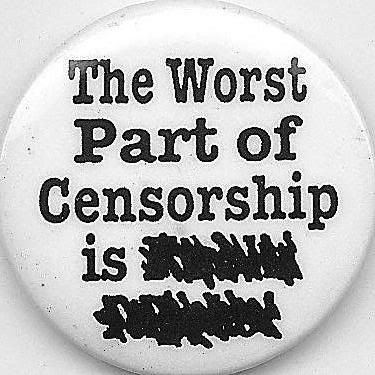
Internet Censorship. The recurring nightmare for an expatriate Australian.

I've lived in China for almost a decade now, leaving Australia in 1999 I watched gymnastics, table tennis and the diving of the Sydney Olympics on television with a Chinese commentator. It was then that I first felt the first pang of home sickness.

Over the years I have learned to cope with being away from the sun through our hole in the Ozone, beaches with waves, people who look you in the eye and say “Good Morning” when you enter an elevator and generally better personal hygiene. Living in China though does have it's advantages. Cost of living is much lower. Personal income tax is marginally lower and in the little pockets of humanity in the bustling city of Shanghai one finds a wealth of humanity (albeit not as multicultural) that can only be offered from a city of twenty million people.

I am writing this post because through my twitter spy hole into the minds of Aussie geeks, there is much anguish about the move to censor the internet. I won't go into the politics of this as I really am out of touch with Australian politics. (you can read more about this on http://nocleanfeed.com/ ) What I hope to achieve to provide a look into what it is like to live in a country that is renowned for their Great Firewall.

First of all, China is not a national democracy. There are actually elections for local municipal representatives but generally, most Chinese have no say in who is running their country. As a result, many policies are are made unilaterally and the decision to censor the internet was made by the Ministry of Information Industry (Now called the Ministry of Industry and Information Technology or MIIT) This ministry's role is not as innocuous as it sounds though. It is in charge of the telecommunications system and the internet but part of the role of this ministry is also public security and has under it's purview ensuring that state secrets don't get into the wrong hands. If you recall a crashed US surveillance plane in Hainan Island, these were the folk that dismantled it and reverse engineered the technology before returning the plane to the US in small pieces.

The rationale behind the control of information on the internet (and everywhere else for that matter) in China is to prevent revolt as much as moral inappropriateness. You can look up articles on what is blocked in China but many personal blogs hosted outside of China certain keywords fall into the list of blocked sites. I will avoid using those keywords in this article but suffice to say they refer to certain historical events, certain religious organisations and certain regions within or near China. Of course most pornographic sites are also blocked.

Over the years the system has gotten more sophisticated and it is only this year that Wikipedia was unblocked. Wikipedia is edited by the public and as such certain historical accounts might be written in such a way that is not pro-China. Now the capability has been developed to only block certain pages and not an entire site. In fact a while a go the practice was to block entire IP ranges, the same way that some spam blocker like to block all emails that come from a particular country. My point is that over the years, internet blocking has transformed from a blunt instrument to quite a sharp one, although I admit it is more like a butter knife than a scalpel.

How do they achieve this. It is rumoured that a staff of 30,000 are employed by the Golden Shield Project (the official name for the Great Firewall) to select what to block along with whatever algorithm they use to automatically block sites. I suspect that there are more people working on behalf of the censors if you include people who have been forced to self regulate their sites to keep them from being shut down within China. This goes as far as to block certain posts on bulletin boards to prevent discussions of events. If you click here you will see an article that refers to a bulletin post that was deleted due to inappropriateness. This is not uncommon.

So censoring the internet is not a small task of flicking a switch because internet savvy people are generally savvy and if you are going to make it effective then you'd better be ready to commit to it for the long haul. It will cost not only money, but people. Not just your average smart person but folk who can outsmart those who make money from those kiddy porn sites that I imagine Stephen Conroy wants to target. China churns out 40,000 technical graduates a year. They are underpaid, underemployed and it is these people that are probably responsible for the US accusation that China hacked the Pentagon systems. My point is if you are going to censor the internet, you're going to need a huge pool of extremely talented technologists to keep it going because those sites that really want to get through the firewall, will get through.

The situation in China is one of acceptance and if you really want to access a site there are simple ways around it. For instance Google Reader is not blocked in China so if certain blogs are blocked then you need only subscribe to them in via an RSS feed and then you can read them. Once again I won't go into much more detail about other ways to get around the GFW in case I am lucky to have one of the 30,000 Golden Shield staff read my blog. So as much as the GFW is an inconvenience, if people really want to get to certain content, there are many ways to get to it and by censoring the internet it is really only going to prevent those who are casual internet users from finding a loophole.

Censoring the internet is not only costly but it doesn't really work. It is a blunt instrument unless you plan to invest a huge amount of resources and man hours into it and unless there is a payoff for you to make that investment, (which for China is political and social stability of 1.5 billion people) it is a strategy that is extremely difficult to justify. If Australia is serious about censorship then there are some things they have to get right first.

  1. Make sure that you have enough technical graduates to support such a strategy.

  2. Give back to the people you're are censoring by making broadband access extremely affordable. (In China it costs AUD20 per month for a 1Gig unlimited access line)

  3. Understand that for a nation of only 20 million, a unilateral infringement on the basic freedoms of speech and freedoms of press is probably not better than a targetted and widespread campaign to encourage self regulation.

With that in mind, I wish my fellow Australian good luck as you battle the forces of technological oppression.

P.S. If you want to see some of what is blocked in China to a twitter search for gfwlist

Sunday, 22 June 2008

Looking for Comedy in the Chinese World

A while back I saw a film called “Looking for Comedy in the Muslim World” by Albert Brooks. Brooks, who's most successful role appears to be “Marlin” the overly protective paternal clown fish in the Disney production “Finding Nemo” has always come across as a somewhat self deprecating comedian who gets most of his laughs from being a neurotic and overly up-tight middle class American.


His movie (in which he starred, wrote and directed) about the Muslim world was a box office bomb but the concept of comedy in non-western societies has a great deal or merit.

The Chinese society today, like the Arabs, doesn't really come across as a culture that is overly satirical or funny to the outside world. More so with the current international political and societal stance of China it is hard to view China as a funny nation.

In my time in Shanghai as a cultural bastard or what is commonly referred to as a banana (Yellow on the outside, white on the inside) I have experienced first hand blank looks from Chinese staff and colleagues when I try to use Australian satire in my communications. Australian humor is a slightly less dry version British humor. Thick with sarcasm and self deprecation in the style that is populated by comedians such as Steady Eddie (a stand up comedian who has cerebral palsy, making spastic jokes) and Jimoen (an Irish comedian making Irish jokes). There are cultural comedic icons during my upbringing such as Con the Fruiterer (A Greek fruit store owner who makes fun of his Western European mannerisms) and Ted Bullpit from the show Kingswood Country (a stereotypical White Australian suburban bigot).

Beyond the former British Empire other Western comedians have entertained generations with stories that deprecate their own culture. As a teenager I grew up with Eddie Murphy's RAW on VHS and Afro-American comedians like Chris Rock generated laughs through stories of their “ghetto” childhoods. Billy Connelly also took advantage of his cultural heritage to make jokes about his rough Glaswegian upbringing. Throughout the recent history of comedy and humor in the Western world we see continued reference to differing cultural and societal conditions that form the basis for us to have a good old belly laugh at people who are different from us but in a strange way offer insight into our own taboo's.

In addition to these cultural characters, that I grew up with and formed my sense of humor, is also a long history of Political humor. In both British & Australian comedic history, comedians have made long careers out of making politicians the butt of their jokes and the more recent phenomenon of Jon Stewart and Stephen Colbert, Americans have now whole heartedly embraced political satire.

As Chinese culture continues to infiltrating western media. Jacky Chan's brand of slapstick humor and, to a limited degree, Stephen Chow's Shaolin Soccer and Kung Fu are now almost as famous as Mr Bean's rubbery face. Gong Li and Zhang Ziyi are as appealing on the red carpet as any other Hollywood sex symbol, but where are the Chinese Sienfeld's of this world? What does Chinese sarcasm taste like? Does satire really have no place next to Confucius?

Putting comedy in the context of modern Chinese history is a bit of a sensitive topic. Chinese reverence for authoritative figures pretty much put the realm of political satire out of bounds when it comes to Chinese comedy. Culturally speaking, very little is spoken of the cultural minorities in China so that pretty much rules out “ghetto” based humor. It is viewed as bad taste to make fun of ethnic Tibetan or Mongolians as a means to get a laugh. In fact if you are going to base satire on any type of minority, you better make damn sure that your joke is not going to cause a riot or any type of social unrest. Off the top of my head, the only minority group that you can make fun of in China without the fear of reprisal is the laowai's.

The one form of stand up that has been institutionalised is called “xiangsheng” or “crosstalk” and has a long history in Chinese entertainment. Similar to the kind of exchange you'd get from Dean Martin & Jerry Lewis or an Abbot & Costello skit, this form of humor is mild enough to not offend the Maoist hangover or get any sensitive minorities up in arms. Of the little about this topic on the internet, David Moser gives a very good explanation of this form of stand up in his article on danwei.com. The painful reality is though is that this form of comedy, is just not funny. It is like stringing together a series of jokes, double entendres and puns between a goof and a straight man. Not since the 1940's has this been something like that actually had you belly laughing and that is where Chinese humor stopped evolving.

The cultural revolution in China was pretty much a cultural devolution for stand up comedy. The whole problem with all this (as I see it) is that Chinese people are by and large funny people. Look at the way they dress. Look at what they eat. Look at the way they perceive the world. There is an abundance of material every time you walk out the door. What's more, most Chinese people don't really have religious predisposition that prohibits them from taking things lightly. In fact of the people that I have been in contact with, most Chinese are devoid of the prudishness about sex that comes with some Western societies. I believe it is time high time for China to have a Comedic Revolution before we fall into the trap of taking ourselves way too seriously. I am certain that international relations could possibly be improved with China's western trading partners if more tongues were occasionally placed in the cheek.

After the devastation of the Sichuan earthquake and the floods in Southern China, I believe that laughter is still the best medicine and it is our duty as Chinese citizens, ethnic Chinese and folks living in China to make a concerted effort to bring humor to one billion people who really needs something to put a smile on their face.

More stuff on the topic of comedy in China;

http://smallswordsmagazine.com/articles/life/chinesesarcasm.html

http://english.people.com.cn/200606/08/eng20060608_271941.html

Saturday, 24 May 2008

Mark Pimps me out

Mark Pesce in Sydney was nice enough to ask me if it was ok to mention me in his speech in Sydney & Melbourne for AUreMIX08. I said okay as long as he didn't make me look like a jerk. Didn't expect my profile pic to be on screen for that long though.

Thursday, 15 May 2008

The Enemy of My Enemy is My Friend

I attended a private school in Sydney's inner west. My school's colors were green and white and if you are from that part of the world you will know which school it is. A nearby private school in the same area used the colors black and white.

These two schools were rivals. Not only on the sporting field and in academic achievement did we compete but at the train stations, where students from both these schools would congregate before and after school hours, we also competed for territory at Strathfield Station and for the attention of girls from the nearby private girls schools. It was not an understatement to say that we hated each other.

As I watch the development of two humanitarian disasters unfold in Sichuan and Myanmar, I am reminded of an incident in the late 80's when a senior student from another local catholic non-private school, (in peer driven act of teenage stupidity) struck a junior student from my school and broke his nose. Now I am not here to justify what occurred afterwards but when the news got out, the senior boy from the catholic school and his mates got the retribution of not just the friends of the boy who's nose was broken but from the rubgy teams of both my school and the black and white school. Our normal rivalry and social hatred dissolved as we joined forces to right a perceived wrong.

In Sichuan today I am reading aid workers from Japan, Taiwan & Russia have reached the disaster area. Donations have come and are still coming from all over the world and I can see, countries that are usually at odds with China, joining forces to right this perceived wrong. To combat a common enemy of disaster and misfortune. Furthermore, citizens, children, foreigners and even those who can scarcely afford charity are digging into their pockets to contribute to the relief being provided to the victims and survivors of the earthquake.

Elsewhere in Asia though, I can see that no such solidarity is evident in Myanmar. Although there are aid organisation and countries lining up to offer help, within the country, those who most need this aid are not getting it. It angers me to see that the government in power are trying to fool the world into thinking that everything is under control when it is evidently not.

This may seem simplistic but I put this difference down to a difference in perception. China perceives the enemy is the disaster and we who have nothing else in common are united in fighting the enemy that is common. Sure there are political ramifications to think of but the Chinese Government has correctly prioritized that death and destruction is a greater enemy than the balance of trade or border conflicts.

Conversely the enemy in Myanmar is perceived to be the "The Image of Myanmar in the global community" and the cyclone has attacked not the citizens but has attacked that image. The cyclone has attacked the perception that "everything is okay in Myanmar" and in their fight against this enemy, they are doing everything they can to fix this perception and let everybody know that everything is okay. Unfortunately this enemy is not the same as everyone else's and so there is no alignment.

It is sad to think that simply because the leadership's perception is wrong that some of the 25 thousand plus casualties were not avoided, however it is encouraging to think that many lives have been saved because the Chinese leadership and the world have banded together, despite their differences to fight a common enemy.

It is also interesting to note that in the 1976 Tangshan earthquake it appears that China thought the same way as Myanmar does now. The official death toll for that disaster was a quarter million. Unofficially over 600,000. Let's hope that Myanmar learns quickly before more life is lost.

Tuesday, 13 May 2008

Chinese Whispers

I like to think of myself as someone in touch with technology but in reality I am just someone who likes to watch. I like to watch what people buy. I like to watch what people are tweeting and I like to think that I am part of that community of people who talk about internet startups, widgets, web 2.0 and social media, but in reality I am a just a voyeur with a keyboard.

Yesterday I started to watch the discussion on the earthquake in Sichuan. My interest came from my Ayi who has still not been able to contact her parents and her brother in Beichuan. What she knows is that her village was flattened and that the roads are too bad to reach her village and that it is unlikely that her parents survived the quake. To me, this struck a little too close to home. Here is the person whom I employ to look after my child, potentially losing her family. Luckily she was able to get a message from her own daughter and sister via sms and they are okay.

So this twitter phenomenon kind of happened because I wanted to collect as much news as possible so that when I got home I could hopefully bring her some news. Rather than cutting and pasting the links I read, I started retweeting posts from people who had found articles, images or eyewitness accounts so that I could just feed my twitter feed into Google Reader and have all those links in one place.

What I found was that as I was retweeting, people were noticing and then retweeting what I was retweeting. Some people referred to me as live blogging from China and more people started following. I found that strange but then I realised that this was a game of Chinese Whispers where those who heard me and pass on what they heard, so I kept on retweeting people kept on following.

Kaiser who blogs at http://digitalwatch.ogilvy.com.cn/en/ mentioned that there is some discussion about twitter breaking the earthquake story and Robert Scoble also wrote something in his blog about twitter but in reality I was following 3 maybe 4 people actually in Chengdu who were tweeting in English and others who were just scanning the various news sources that actually had journalist at the scene.

I got an email from someone from Aljazeera asking to speak to me about the situation in China and I thought to myself that what I was doing in China today, I could have done in Sydney or San Francisco or from my PDA on a beach in Phuket.

So at the end of the day, It was nice to be noticed for a day but all I really did was emulate what Google Reader already does and that was to aggregate what I was reading and then posting it on another feed. As for twitter, I love what it is, and what it is is just a broadcast sms service delivered over the internet where people share what they are doing, and as a watcher or voyeur, what I have seen is that most people spend a lot of their time just surfing the internet and then letting people know what they have read.

It was an interesting, emotional and thought provoking day today. I'll see you all tomorrow and I will be watching.

Friday, 25 April 2008

Spare Parts

Korean BBQ's are the greatest. Gizzards & Ox Tongue. Make you wonder what bovine cunnilingus looks like.

Hmmm.... I think I'm not getting enough carbs in my diet & probably a little too much organ.

Tuesday, 22 April 2008

The Lighter Side of Chinese


With all this seriousness going around I felt it was my duty to lighten things up a bit. Hopeful? Yes! Inappropriate? Probably! But without humour folks are we all not just animals with a vocabulary?

PS: You'll need sound for this slide show to make sense.

Wednesday, 26 March 2008

Through the looking glass

I typed up this article over lunch today and I thought to myself, should I post it. It's very long and personal and maybe no-one will read it. But then I thought what the heck. If I am going to be ignored then I might as well be blabbering something while that's happening. So here goes.... Send.

---------

Watching the World from China is a unique perspective. Over the last 8 years in this country my views on the World have changed which makes me question whether this is the result of the Chinese propaganda machine or lack of the propaganda from Western nations such as Australia. I would like first however to explain that this is not a sociological study, not is it something that I have done vast amounts of research on. It is purely a representation of personal experience and observations from my life.

Growing up in Australia from the age of four I consider myself first an Australian Immigrant then a subject of the British Empire in Hong Kong. My ties to Mainland China has always been slightly prejudice as Hong Kong people were in the 70's. I make this point not because this article will look at China but because I want to make it clear that I am not trying to spew forth pro-Chinese propaganda myself.

Prior to the turn of the century my views of the world were pretty much the same as most Australians. I viewed Australia as the "Lucky Country" and view the British as annoying elder brothers. The US I viewed as the retarded cousin who married into a rich family that we had to put up with. My views on China at the time were that it was a huge expanse of peasants who were culturally raped by the Mao era. I believed that the last bastion of true Chinese culture came not from China itself but by those who had fled and brought with them the pre-Communist beliefs. This was in the back of my mind but honestly it was filed away so well that I barely gave it second thought in the 90's as I never thought I would come to be in China.

When I arrived in China in 2000 I knew that it was not a backward country, but I could not shake the feeling that touching down in Shanghai I would see rice fields and farmers wearing straw hats ploughing the water soaked fields behind an ox. When I arrived, I was taken to the Bund on my first day and saw something that could have come from an episode of Buck Rogers.

So for eight years I have worked and loved here, raised a family and I look outwards to what could have been and see things that an Australian wouldn't necessarily see. I feel things that in the circle of friends from my uni days would frown upon as insensitive and I ask myself, "Am I
odd one out or are they the ones that are disillusioned? Am I no longer able to see what is right and what is obviously wrong?"

When I talk to people in China about Taiwan, I ask them. "Do you really believe that Taiwan is a provence?" and from people who are born, educated and are about 25ish in age, they will tell you without hesitation. Yes! I sometimes ask if they feel democracy is better than communism and they will once again reply without hesitation that democracy is not as good because people do not always make decisions that are for the good of the people.

Hearing these honest opinions repeatedly in a country that censors the Internet, prohibits foreign media and where people do not vote is interesting because in Australia the freedom of speech, the freedom of information, and the right to elect those who will govern you is the basis of democracy. But are Chinese people oppressed? At least in Shanghai and Beijing and other major cities, they do not appear to be. The seem to continue their daily lives, earning money, dreaming of owning their own home, meeting a partner, having kids (or kid I should say). The need to vote does not seem to be as precious as democracy says it should be.

From inside looking out through my magic looking glass this is what I see. I see an American Empire making decisions for those who did not elect them in such as the Iraqi's, the North Koreans, the Taiwanese, the Tibetan's, Israeli's and the Afghans. I see Islamic fundamentalists
executing infidels but mostly white Americans, I see rioting in Tibet from monks for independence from China on the streets of Tibet and Sichuan but fail to see how overturning cars and destroying property in their home country will prove that an Independent government will make things better for the local inhabitants. I see the Islamic nation of Malaysia having it's first fair democratic election, the aftermath of which is political infighting, racial conflict that caused by the constitution and a parallel monarchistic system that chooses to flex it's muscle to destablise the national government. I see the removal & execution of a tyrant that resulted in anarchy and 4000 American troop deaths and a landscape littered with exploding devices and the nuclear
threat emerging from Iran that was formerly suppressed by that tyrant who in turn was originally armed by America. I see all this through the looking glass that is limited to only what I have experienced and seen before.

I ask this question from a Communist nation who is not being attached by anyone with WMD's, who is not interfering with domestic conflicts except when expressly asked to (ie they are talking to North Korea but not doing anything to ease the pain in Sudan) and who are experiencing double digit economic growth in major cities (as well as the inflationary affects thereof) and are increasingly harming the environment but not at a level that "First World" nations are yet. They
are also restricting the independence of Tibet and Taiwan (Of course if Queenland seriously wanted to be it's own country then I am sure there would be some resistance as well), arresting journalists, relocating entire towns beneath the 3 gorges dam and artificially manipulating the value of the RMB.

And the question I ask is What is Good and What is Evil? Are my views the result of being brainwashed by an oppressive regime for eight years or is it because I am now free from political spin that influences popular public opinion?

To be honest, I do not know, and until I find out I cannot with certainty distinguish right from wrong. Perhaps if I relocate to Fiji my view of the world will change again.

Monday, 20 August 2007

Shanghai Welcomes Further Criticism of Chinese Products

For Immediate Release

21st August 2007 [Shanghai] In a recent conference on China's export policies organised by the Shanghai Bureau of Shuthefuckup, a spokesman for the Bureau stated that he welcomed the criticism from the US. He stated that this kind of international watch dogging was exactly what China needed to motivate Chinese manufacturers to up their game. During a break from a sessions on Convincing Your Trade Partner that It's Not Dumping if You Make a Profit he said "History has shown us that anyone that the US bitches about, inevitably ends up being the leader in that field. Take for instance Japanese car and electronics manufacturers. Household names like Toyota, Honda, Sony, [and] NEC are all the result of years of PR smear campaigns telling the US consumer that Japanese products are shoddy."

He said that the only regret that he had in the recent recall announcements were that companies under scrutiny were not Chinese companies, and that he was actually quite concerned that both children and adults would be affected by the lead contained in the painted toys. He explained "Only last week, I had to take my sons Malibu Barbie off him and replace it with a cheaper Chinese imitation. I really feared for his health as he spends much of his free time licking the paint off the doll."

Asssociated Presss

Tuesday, 14 August 2007

The Global Sand Pit

For many years I pondered what real qualifications do you need to get into global politics but recently, watching the to and fro between China and the US has led me to believe that all you really need is a good primary school education. Consider the most recent exchanges of possibly the two most powerful nations in the world today.

This is brinkmanship at it's best.

US: You have too much of a trade surplus so rather than trying to be more globally competitive lets increase tariffs on Chinese products like bra's and t-shirts.

CN: Fine! But if you we're going to dump a big chunk of our $1 trillion USD on the open market to cripple your currency.

US: Oh Shit, that's not good. In that case let's create a smear campaign against China made toys and fake a story of cardboard in pork buns.

CN: Hmmm, just for that, lets announce that US made GE turbines are unsafe.

US: You want us to stop selling arms to Taiwan you'd better increase the value of the RMB
CN: You want us to talk to North Korea for you better shut the F#%K UP

US: Your human rights record stinks.

CN: And where are those weapons of mass destruction?

US: Yo mamma so fat...... (well you can see the direction this is heading)

It all going to end in tears.